Storytelling Archives - Michigan Central https://michigancentral.com/category/storytelling/ Corktown, Detroit Thu, 07 Aug 2025 19:51:05 +0000 en-US hourly 1 https://wordpress.org/?v=6.9 https://michigancentral.com/wp-content/uploads/2024/07/cropped-mc-_logo-32x32.jpg Storytelling Archives - Michigan Central https://michigancentral.com/category/storytelling/ 32 32 Powering the Next Era of Industrial Innovation in Detroit https://michigancentral.com/powering-the-next-era-of-industrial-innovation-in-detroit/ Tue, 05 Aug 2025 01:01:14 +0000 https://michigancentral.com/?p=22325 In 1913, Detroit was the birthplace of the world’s first moving assembly line, a breakthrough that didn’t just revitalize the auto industry but also transformed global manufacturing forever. That innovation, led by Ford Motor Company, laid the foundation for mass production as we know it, proving that when Detroit builds, the world takes note. photo […]

The post Powering the Next Era of Industrial Innovation in Detroit appeared first on Michigan Central.

]]>
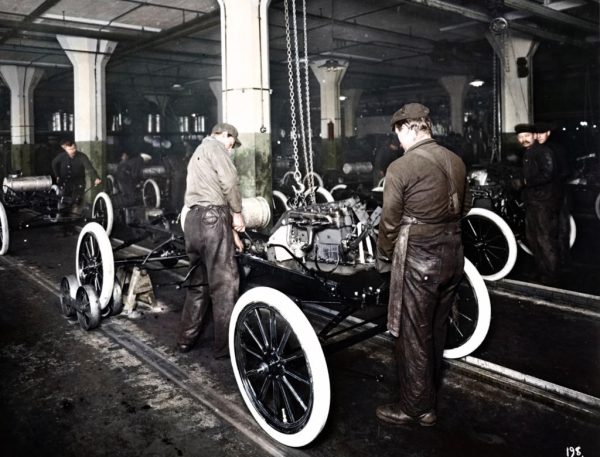
In 1913, Detroit was the birthplace of the world’s first moving assembly line, a breakthrough that didn’t just revitalize the auto industry but also transformed global manufacturing forever. That innovation, led by Ford Motor Company, laid the foundation for mass production as we know it, proving that when Detroit builds, the world takes note.

photo credit: Ford Motor Co.

Today we are building on that legacy. At Michigan Central, we’re developing the next era of innovation across our sprawling 30-acre campus in the heart of Detroit. Here you’ll find companies working on micromobility solutions, drone deployments, autonomous vehicle technology, sustainable transit solutions, and other initiatives that have the goal of shaping the future of transportation in urban living. Anchored by our venture partner Newlab, this ecosystem has become a powerful launchpad for startups and entrepreneurs who are using advanced technologies to address some of the most pressing challenges facing humanity today.

photo credit: Orange Sparkle Ball

By combining Detroit’s industrial heritage with world-class facilities, a future-focused talent pipeline, and a collaborative startup environment led by Newlab, we’re creating a model for urban industrial innovation that is built to last and built to grow.

A Unique and Supportive Ecosystem 

Michigan Central is a nationally-recognized hub where startups, industry leaders, and public partners come together to design, test, build, and deploy real solutions.

Since we opened our doors in 2023, we’ve listened and learned a lot from our innovator community—which includes nearly 240 companies. Emerging technologies—like drones, electrification platforms, robotics, and micromobility—are fast-changing industries. New trends emerge. Regulations shift. Markets expand and contract.

The new generation of mobility and industrial technology requires something different. It demands speed and flexibility over sheer volume. It requires the ability to iterate quickly and produce in smaller quantities. It needs agile manufacturing to succeed.

Together with Newlab, we give startups the tools they need to move ideas from prototype to production under one roof. Michigan Central companies have access to infrastructure, network and space to scale like:

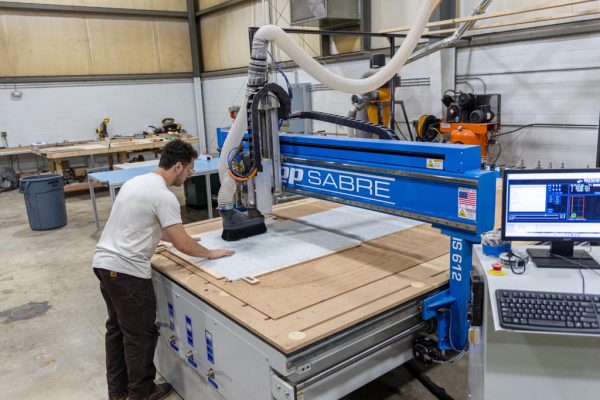
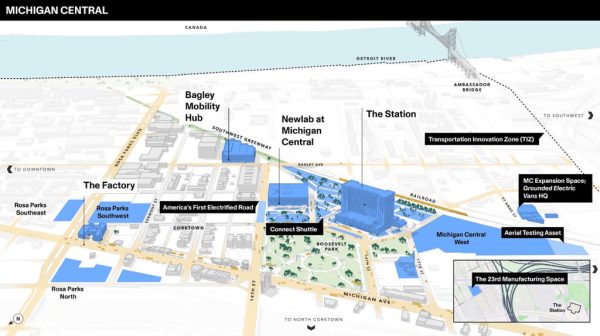
  • 18,000 square feet of advanced prototyping and fabrication facilities with 3D printers, CNC machines, welding bays, and flexible assembly space in Newlab at Michigan Central

  • 4-square mile Transportation Innovation Zone which offers streamlined permitting for test deployments such as connected and autonomous vehicles, delivery robots, and more

  • 3-mile Advanced Aerial Innovation Region which supports the deployment of drone technology in an urban environment

  • Nearly 30 venture capital firms co-located at Michigan Central, providing startups with access to funding, allowing them to test their technology and bring it to market

And, in addition to 8 acres of Michigan Central’s nearby industrial-zoned real estate that can potentially be activated for manufacturing, Newlab recently announced the launch of “The 23rd,” a 380,000-square-foot manufacturing campus just west of the Michigan Central district in which they will have a dedicated space.

This environment gives innovators the ability to move from concept to commercialization without leaving Detroit. To date, 40% of our startups have relocated to Michigan Central from outside Michigan, with more than 10% coming internationally.

Startups like Lincode Labs, Peer Robotics and Sharrow Marine chose to move to or open locations in Detroit and set up shop here because Michigan Central and Newlab make it possible to design, iterate, and scale within a supportive environment.

Others have stayed or expanded production from here. Detroit-based company Boaz Bikes has more control over manufacturing quality in a city that truly understands the complexities of urban transportation – resulting in faster turnarounds and the agility to integrate improvements on the fly.

Detroit Is Where It’s At

photo credit: Jason Keen

The city has the key ingredients for America’s industrial renaissance: legacy industrial know-how, pro-innovation and pro-manufacturing policies, optimal real estate zoning and costs, and an ongoing city revitalization to reassert Detroit as the driver of innovation, culture and economic prosperity that are core to the city’s long-standing identity as a leader of invention and industrialism.

Detroit is already evolving into a national mecca for innovation. In the past few years alone, the region has welcomed hundreds of new technology and manufacturing operations, drawn by Detroit’s unique combination of affordable industrial space, pro-business policies, and deep manufacturing expertise. From advanced battery production and electric vehicles to micromobility, drones, and robotics, Detroit has become a proving ground for next-generation solutions. Major investments from both public and private sectors have accelerated this transformation, fueling new research centers, production facilities, and partnerships with universities. This surge of activity isn’t hypothetical—it’s happening now, and it’s positioning Detroit as the place where ambitious founders and industry leaders come to build what’s next.

Joining Us in Building What Comes Next

The next era of American manufacturing is taking shape right here and we invite you to be a part of it. Along with ecosystem partner Newlab, we are setting a new standard for how Detroit and other cities can lead the industrial future, offering access to resources like venture capital, logistics infrastructure, engineering support, and workforce development.

When you choose Michigan Central, you’re not just getting desk space—you’re joining a community of builders, investors, and entrepreneurs working to redefine what the future can be.

Let’s build it together.

The post Powering the Next Era of Industrial Innovation in Detroit appeared first on Michigan Central.

]]>
Google’s Code Next Detroit Returns to Michigan Central https://michigancentral.com/googles-code-next-detroit-returns-to-michigan-central/ Fri, 07 Jul 2023 15:12:29 +0000 https://michigancentral.com/?p=3352 Google’s Code Next Detroit is a free computer science education program that meets Black, Latinx and Native American high school students in their own communities and provides the skills and inspiration they need for long and rewarding careers in computer science-related fields. Michigan Central’s Code Next Detroit Lab offers students free hands-on training and direct […]

The post Google’s Code Next Detroit Returns to Michigan Central appeared first on Michigan Central.

]]>
Google’s Code Next Detroit is a free computer science education program that meets Black, Latinx and Native American high school students in their own communities and provides the skills and inspiration they need for long and rewarding careers in computer science-related fields. Michigan Central’s Code Next Detroit Lab offers students free hands-on training and direct access to professional mentors, tech experts, and state of art technologies like 3D printing and augmented reality.

Two Code Next students high-five.

Are you or your high-schooler interested in Code Next Detroit? The 2023-2024 winter semester applications are open now through August 4th. If you are a Detroit-area high school student interested in finding more information or applying, follow this link.

To learn more about the experiences available, Code Next Detroit instructor Naomi Hill recently spent some time with Israel Muniz, a 9th grade student enrolled in the program. Here’s what he had to say:

Naomi: What do you enjoy most about the Code Next program?

Israel: The thing that I enjoy most about Code Next is that it challenges you to expand your knowledge base in the area of computer science and engineering while allowing space for you to learn at your own pace. It also gives you the opportunity to directly engage with new technology, like 3D printing and coding, but in a learning environment that’s more inviting than a traditional classroom.

Naomi: What surprised you most about Code Next?

Israel: When I read the initial information before applying, I thought it was too good to be true. So, the most surprising part about it was partially that it wasn’t a scam. But more importantly, Code Next is a place where there are others who have the same interests as me, where I don’t feel out of place with my ideas for new ingenuity. Code Next makes me feel like I’m not alone and a part of something so much bigger. In all it has exceeded my expectations— from the curriculum, to the students I’ve developed relationships with, to the coaches who encourage us to push the limits of our thinking.

Naomi: What experiences have you had through Code Next that are different from your high school experience?

Israel: I’ve had so many amazing experiences, from meeting the Lt. Governor of Michigan to participating in the #IamRemarkable workshop. Code Next is an amazing way to escape and learn amazing new tech in a chill environment.

Naomi: Has Code Next given you motivation to explore a career in mobility or computer science?

Israel: Code Next has helped me begin to focus on my college and career path. I knew that I enjoyed gaming, architecture and media before participating in this program. But my experience has clarified the broad range of opportunities that are available. I’ve also been able to explore dual enrollment options for college credits and the coaches are always willing to sit down and help you decide what path you may take.

Naomi: Do you enjoy coming to Michigan Central for Code Next?

Israel: To say I love coming to Code Next is an understatement. If I’m being completely honest, I hate that it’s only 5 days out of the week. Even though it’s only a couple hours a week I cherish every moment and never want to leave.

Naomi: Thanks Israel! And good luck in the future!

Israel: Thank you too!

Special thanks to Israel Muniz, Asim Williams, Naomi Hill and Nando Felten from Code Next Detroit!

Do you think you are a good fit for Code Next Detroit? Applications for the 2023-24 year are open now through August 4th.
Apply Now for Code Next Detroit

The post Google’s Code Next Detroit Returns to Michigan Central appeared first on Michigan Central.

]]>
Cross-Functional Teams at Ford Use 3D Printing to Capture Fine Details of Window Decorations, Ceiling Tiles for Michigan Central Station https://michigancentral.com/cross-functional-teams-at-ford-use-3d-printing-to-capture-fine-details-of-window-decorations-ceiling-tiles-for-michigan-central-station/ Tue, 05 Apr 2022 19:56:04 +0000 https://michigancentral.com/?p=2146 By Paul Kampe While architectural restoration isn’t an area of expertise you might expect to find at an automobile company, several teams at Ford are collaborating to deploy their skills to restore some of the finest, most intricate details of Michigan Central Station, which will serve as the anchor of the Michigan Central mobility innovation […]

The post Cross-Functional Teams at Ford Use 3D Printing to Capture Fine Details of Window Decorations, Ceiling Tiles for Michigan Central Station appeared first on Michigan Central.

]]>
By Paul Kampe

While architectural restoration isn’t an area of expertise you might expect to find at an automobile company, several teams at Ford are collaborating to deploy their skills to restore some of the finest, most intricate details of Michigan Central Station, which will serve as the anchor of the Michigan Central mobility innovation district when it opens next year.

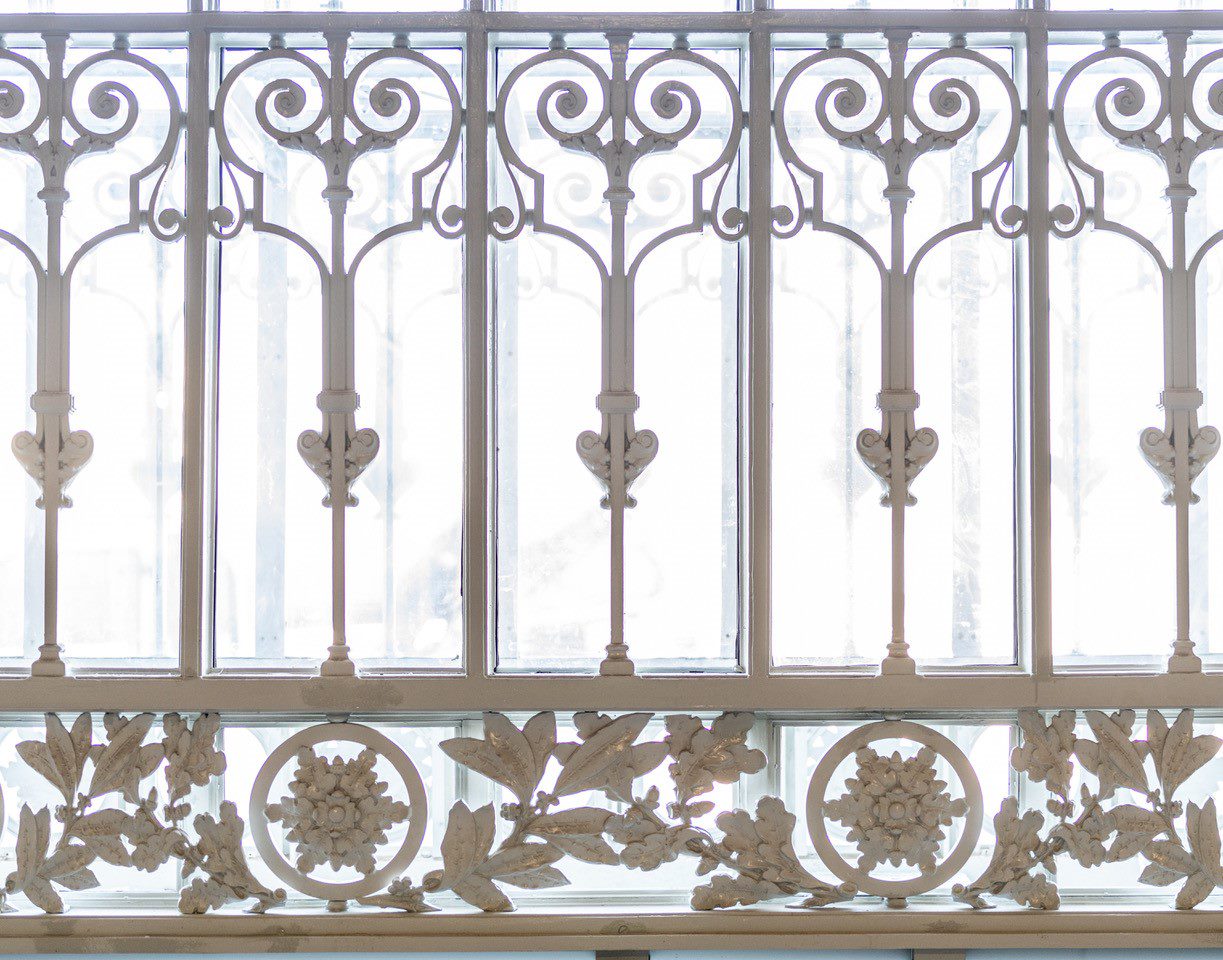
The very technology typically used to push the boundaries of automotive research and development is now being incorporated to re-create hundreds of Beaux Arts-style elements of the century-old former train depot. This includes the beautiful rosettes and filigree that adorn the large arch windows along the north, east and west sides of the building.

Multiple skill teams at Ford, including research and advanced engineering, Ford Land, manufacturing technology development, and non-destructive evaluation are leveraging their expertise in 3D computer-aided design processing, 3D scanning and 3D printing to re-create the detailed window elements, as well as a portion of the building’s ceiling tiles.

Bob Bedard, supervisor, additive manufacturing plastics, said printing helps to preserve the original aesthetic of the rosettes, filigree and ceiling tiles in their architectural element.

Many original elements had either been removed or were broken between the time the station closed in 1988 and when Ford began its restoration 30 years later. The teams initially used photographs of the originals to create replicas, but they were able to start 3D scanning the items when some of the originals were donated back to Ford. They were scanned, in part, by Ford’s manufacturing technology development team.

Before the scans could be printed, they were reverse engineered by members of Ford’s non-destructive evaluation team using a CAD process that restores each scan to their original design. Scans of broken pieces were combined, and missing areas were redesigned. Others were made manifold, resized, smoothed and restored with various anchor points added in. Then, the manufacturing technology development team was able to print the rosettes and filigree at Ford’s Advanced Manufacturing Center in Redford Township, Michigan.

“Ford could have decided to just modernize Michigan Central Station, but they’re taking great efforts to make sure this thing really reflects the way this building looked and felt inside and outside,” said Harold Sears, additive manufacturing technical leader for manufacturing.

The rosettes and filigree tie in with other botanical elements throughout Michigan Central Station as well. “They bring in this beautiful element to the windows,” said Bedard. “This helps continue that design language throughout.”

The thermoplastic polymer used for the new parts is much lighter, making for much easier installation than the originals. Whereas a tool would have been required to form an original metal part, a 3D printer deposits material in the proper position and at the right temperature. Plus, the printing process takes just days instead of weeks or even months.

Recently, hundreds of the digital replicas were unveiled. Design modifications for the last three arch windows, for which new frames were built, are being finalized and will soon be in place. The majority of the circular rosettes are about 12 inches wide, while most of their branched filigree, which feature either laurel leaves or an oak leaf pattern, are about 26 inches long. Among the nearly 550 pieces are 20 variants of differing lengths and flower positioning, printed in six batches, each taking approximately three weeks between May and November. The pieces mark Ford’s first use of polymer additive manufacturing for architectural construction.

Gary Marshall, project manager, Detroit development, Ford Land, said many people may not even realize Ford uses 3D printing to support vehicle development, let alone the restoration of one of the region’s most iconic buildings. “It is really cool for Ford to be able to show its capabilities,” he said. “It is a melding of the teams and it has worked out really well.”

The original handcrafted window rosettes and filigree are matched as closely as possible through 3D scanning. Their color, Austere Gray, was selected following a study in collaboration with paint specialist Sherwin-Williams. The process helped determine the best match to the original color and the most appropriate color for the lighting.

The floral portions of the square 6.5-inch ceiling tiles in what were once the station’s adjoining tea room and reading rooms will be re-created and the ceiling will be painted Alabaster. The teams had considered printing the ceiling tiles in their entirety, but they were too large. The rest of the tiles will be created using glass fiber-reinforced gypsum, with the printed florets placed in the middle of each piece.

The project, which began in 2019 with discussions on how 3D printing could be best implemented into restoration of Michigan Central Station, required months of 3D scanning that followed in 2020.

Ford was an early adopter of 3D printing, as well as the technology that allows the non-destructive evaluation team to modify scan files for printing, said Beverly Minicilli, senior engineer, machining. Ford has used the technology to re-create a steam injector for an 1890s train at Henry Ford Museum of American Innovation, and for several parts for restoration of Fairlane Estate, including re-creating original bronze thermostats.

“Anything you need to duplicate or replicate, you can do with scan data,” said Minicilli.

Bedard said the teamwork involved in this project has made it the most satisfying work he has ever been a part of. “This is not just a research and advanced engineering project – this is a collaborative project,” he said. “We made these parts in-house – Ford made these parts. Part of our drive as a company is to bring new technologies into production applications when they’re ready, and to always be innovating to find a better, more sustainable, safer way to bring things to fruition.”

Bringing modern technology to the restoration of a 100-plus-year-old building is poetic, he added. “It’s a beautiful thing we could do that for this priceless landmark.”

Example of 3D printed filigree in front of a window.

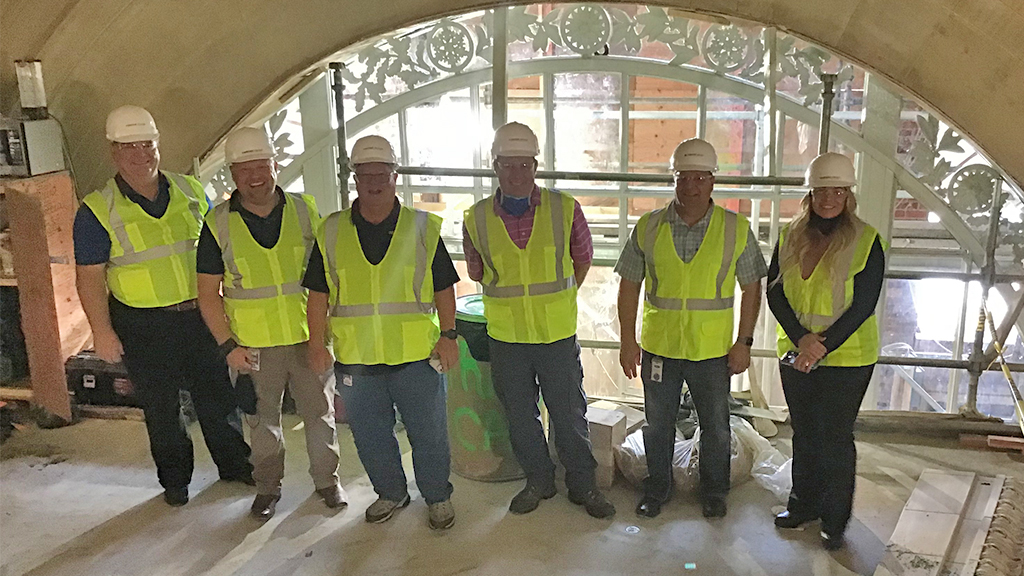
Six construction workers standing by an arch window.

Photo Credit: Stephen McGee

Cross-functional Ford team, from left: Martin Jones (non-destructive evaluation lab), Bob Bedard (research and advanced engineering), John Phillips, Jay Haubenstricker and Scott Gafken (all from manufacturing technology development), Beverly Minicilli (non-destructive evaluation lab). Photo by Gary Marshall (Ford Land, not pictured).

The post Cross-Functional Teams at Ford Use 3D Printing to Capture Fine Details of Window Decorations, Ceiling Tiles for Michigan Central Station appeared first on Michigan Central.

]]>
Michigan Central Innovation District Has Made Great Strides Since June 2018 Announcement https://michigancentral.com/michigan-central-innovation-district-has-made-great-strides-since-june-2018-announcement/ Thu, 19 Aug 2021 15:25:53 +0000 https://michigancentral.com/?p=1296 In June 2018, at an event that featured the Detroit Children’s Choir alongside community leaders and activists, Ford made headlines around the world with the announcement that the company had acquired Detroit’s iconic Michigan Central Station. Designed by the same architects as New York’s Grand Central, the building had become a prime example of vacant […]

The post Michigan Central Innovation District Has Made Great Strides Since June 2018 Announcement appeared first on Michigan Central.

]]>
In June 2018, at an event that featured the Detroit Children’s Choir alongside community leaders and activists, Ford made headlines around the world with the announcement that the company had acquired Detroit’s iconic Michigan Central Station. Designed by the same architects as New York’s Grand Central, the building had become a prime example of vacant Detroit real estate during decades of disuse, but the company announced the beginning of a new era for the building: Michigan Central Station would be lovingly restored as the centerpiece of an innovation hub focused on designing the mobility solutions of the future: autonomous vehicles, electric vehicles, scooters, light rail, drones, and beyond.

In the three years since, despite a global pandemic, vision for that innovation district has only sharpened and grown, with new plans to welcome innovators from around the globe to design and prototype in one of the nation’s most important historical restoration projects, with deep roots in, and deep commitment to, the Detroit community.

“We want this to be a community space,” Bill Ford, Executive Chair of Ford Motor Company, declared in the original announcement. “We want everyone to be involved.” Over the past three years, the company has put this promise into action. As plans for the restoration came together, Ford laid groundwork of another kind in the community, creating a Community Benefits Agreement with Detroit that contained over forty commitments to affordable housing, workforce development, youth development and education, and neighborhood development, including grants for everything from community art projects to home repair. And Michigan Central has worked to create an ongoing dialogue with the local community, through a newsletter published in both English and Spanish, a local information center, and regular community meetings.

At the same time, architects and builders are making progress on a restoration that they say is both important and unique. Quinn Evans, the architect of record for Michigan Central Station, has restored the Lincoln Memorial, Mount Vernon, and Frank Lloyd Wright’s Falling Water, but Richard Hess, who leads the Michigan Central Station restoration from their Detroit office, says that this job “takes every skill set and level of expertise in restoration,” from plaster to terracotta, and from to stone to steel.

Detroit firm The Christman Company, in a joint venture with L.S. Brinker, is serving as Construction Manager for the project. Christman/Brinker’s experience includes construction of the Masonic Temple and the Fisher Building, and restorations on the Michigan State Capitol, the U.S. Capitol, and Ernest Hemingway’s Cuban home. But Ron Staley, who leads their team at Michigan Central Station, says that Ford “really set the standard” in their commitment to a beautiful restoration, from the smallest details, like putting someone on a plane to find a decorative element in another state, to adjusting plans when a 60,000 square foot sub-basement, not noted in any of the existing plans, was discovered after millions of gallons of water were pumped out of the main basement. Hess has also been impressed by Ford’s “persistence and determination.” Many restorations, even smaller ones, have timelines of six or eight years. But on Ford’s schedule, Michigan Central will be done in less than five, with the majority of construction scheduled for completion at the end of 2022.

Before the sale of the building, the first question planners had to answer was whether the structure could even be salvaged. “We’d never seen anything of this size in this form of abandonment,” says Staley. Due to roof damage, rain had been pouring into the building for years, leaving about five feet of standing water in the basement, and six feet of ice that collected each winter on top of the striking Guastavino tile domes in the main atrium. The building had also stood without windows for at least a decade.

In the dead of winter, when entire hallways were full of snowfall and ice, architects and engineers walked and sometimes crawled through the building to complete an initial inspection. The news was good: despite the challenges, the bones of the building were still strong. But the restoration effort had started just in the nick of time. If it had stood empty for a few more years, both Staley and Hess say, it might have reached a point of no return.

Starting the project was daunting, because of its historical importance, its meaning in the Detroit community, and its sheer size. “There’s no other Mount Vernon in the country,” says Hess. “There’s no other Lincoln Memorial. And there’s no other Michigan Central. It is one of a kind.” But Richard Bardelli, who spearheads construction for Ford, estimated what it would take to rebuild it by breaking the massive project down into parts: office building, hotel, parking deck. And architects at Quinn Evans drew plans to fix it, Hess says, “the same way we fix anything: brick by brick.”

Job number one was safety. The building didn’t come anywhere near to meeting OSHA standards: floors were full of holes, tile and terracotta were in danger of falling from the ceiling and roof, staircases had no handrails, and none of the building’s original electric systems were capable of providing power. Rooms were also full of debris, some of it hazardous. Before architects and engineers could walk in, Christman/Brinker’s team had to make it safe.

Once workers arrived, the major task was dealing with water: pumping millions of gallons out of the basement, making sure no more could get in, and letting plaster and stone that had absorbed moisture dry out so they could work with it, which took the better part of a year. After stabilization, workers began restoration on the rest of the building, putting in the underlying mechanical systems. One major challenge: installing ductwork for modern heating and cooling, since the “air-conditioning” of 1913, when the building was designed, consisted of opening the giant windows on the face of the building to let in a breeze.

Today, at the third anniversary of the original announcement, the team has entered the third and final phase of construction: creating the finishes that will make the building seem new again, including a massive concrete pour in the basement to anchor the foundation, cleaning the Guastavino tiles in the main waiting room, restoring plaster, and rebuilding lost elements, like the gigantic waiting room chandeliers, based on original plans and old photographs. New glass will be fitted into the striking arches of the ground-floor facade this summer, a highly-visible and moving milestone for the building, after decades of standing open to the elements.

The whole restoration process has blended respect for the past with modern technology, just as the Michigan Central innovation district will when construction is complete. Plasterers repair walls with techniques similar to builders from a hundred years before, while other workers instal elements created by cutting-edge, Ford-designed 3-D modeling–to look just like the originals.

The work won’t just restore the building to what some residents remember, Staley says, because even before it closed in 1988, the station had already become run down, with stains and peeling paint. He thinks many will be astonished by the beauty of the finished restoration: “Nobody in our lifetime has ever seen the building look this way.”

But the Michigan Central Innovation district isn’t just about restoring Detroit’s architectural treasures. It’s firmly focused on driving the future of mobility for the entire world, and innovators are already coming together to create an ecosystem of innovation on the streets around the station. As originally planned, Ford’s autonomous and electric vehicle teams have moved to the neighborhood, and this summer innovators from across the country will begin piloting projects at Michigan Central. Curated by Newlab, which created a world-class innovation hub in Brooklyn, Michigan Central’s first pilots were created in response to the needs of local residents, and include everything from a navigation app for blind people, to autonomous delivery, to solar power signs.

When it’s complete, Michigan Central will be the world’s most ambitious innovation district, and its most all-encompassing, the only one to welcome all forms of mobility, from cars to drones, along with supporting technologies like cutting-edge energy. And it will be part of a unique ecosystem, welcoming innovators, community members, and guests with green spaces, local retail and restaurants, programs and events, and art and culture.

Michigan Central hopes that deep connection with the community might help make mobility in the future more equitable, as well. New technology isn’t always developed with diverse users in mind. But at Michigan Central, mobility innovators will design in the context of the area’s richly diverse neighborhoods, creating mobility solutions not just for some, but for all.

“We’re proud of everything that’s been accomplished since Ford announced our acquisition of Michigan Central Station in 2018,” says Mary Culler, president of the Ford Motor Company Fund. “All of our teams have done stellar work, especially in the face of a global pandemic. But we’re even more excited to see the Michigan Central innovation district come to life, bringing together members of the Detroit community and innovators from around the globe to create the mobility solutions of the future, for everyone.”

The post Michigan Central Innovation District Has Made Great Strides Since June 2018 Announcement appeared first on Michigan Central.

]]>
First Major Renovation To Open At Michigan Central https://michigancentral.com/first-major-renovation-to-open-at-michigan-central-will-serve-its-historic-purpose-and-make-history-for-a-new-age/ Fri, 04 Jun 2021 12:00:57 +0000 https://michigancentral.com/?p=1131 The Book Depository will be the first major renovation at Michigan Central to open its doors, as one of several anchor buildings that will welcome entrepreneurs and startups as well as members of Ford’s mobility team from Detroit and around the world to develop, test and launch solutions to urban transportation challenges. And it’s fitting […]

The post First Major Renovation To Open At Michigan Central appeared first on Michigan Central.

]]>
The Book Depository will be the first major renovation at Michigan Central to open its doors, as one of several anchor buildings that will welcome entrepreneurs and startups as well as members of Ford’s mobility team from Detroit and around the world to develop, test and launch solutions to urban transportation challenges.

And it’s fitting that the Book Depository renovation open first, says Katie Rinaldi, Planning Lead for Ford Motor Company’s Michigan Central development, a new mobility innovation district in Detroit’s Corktown neighborhood. Because although Michigan Central Station is the iconic masterpiece that will anchor the district, “the Book Depository is the heart.”

From the beginning, the Book Depository was built as a partner for Michigan Central Station, says award-winning Design Director Lily Diego of Gensler, the firm that is renovating and reimagining the classic Albert Kahn structure: “They were always meant to be a couple.”

In the 1930s, when the “Architect of Detroit,” Albert Kahn, designed the plans, ideas traveled mostly on paper, and most of that paper traveled by train. So it only made sense to build Detroit’s main post office—the Book Depository’s first role—adjacent to the train station. Underground, Michigan Central Station and the Book Depository are connected by a tunnel big enough to drive a car through, that originally allowed seamless transfers of mail in any weather, and will now allow mobility innovators to drive (or fly, or scoot) their pilot projects right into the Book Depository’s basement.

Kahn, who also designed Detroit landmarks like the Fisher Building, the Ford Rotunda, and Ford’s Rouge Plant, loved to showcase “engineering as an art form,” says Diego. The art of simple structure on full display at the Book Depository, with its large floorplates, twenty-foot ceilings, abundant windows, and signature Kahn “martini columns,” which flute out like martini glasses at the foot and caps. Those columns were a signature “only-in-Detroit” feature of industrial design at the time, not found in other cities. But they’re not just visually striking. They also give the building maximum support with minimum use of space.

To build it all, Kahn used a material combination that was innovative at the time: reinforced concrete, which he hoped would render the building fireproof. The wisdom of that design was proved almost fifty years later, in 1987, when a huge fire swept through the then-abandoned building. The reinforced concrete of Kahn’s original design stayed sturdy despite the flames, preserving the underlying structure intact – which made it a strong candidate for renovation.

If Michigan Central Station and the Book Depository are a couple, Diego says, they could be seen as an odd one. “Michigan Central is slender and gorgeous,” she says, “while the Book Depository is this robust monumental fortress.” And Rinaldi observes that the approach to renovating the two buildings has been different. The goal of renovation at Michigan Central Station is to restore the architectural masterwork, sister-station to New York’s Grand Central, to its original grandeur. But at the Book Depository, Rinaldi says, “there was more room to embrace the gritty industrial use, and reimagine the space for innovators of the future.”

Gensler’s renovation will give the Book Depository, which got its name during a second life storing books for Detroit Public Schools, much of the dramatic impact usually associated with Michigan Central Station. The original ground floor plan was wide open, but Gensler’s design opens it even further, with glass walls that stretch from floor to ceiling – always impressive, but especially so when the ceilings are nineteen feet tall. These huge windows flood the building with light. But more important, says Diego, they provide a view into the building, exposing “the surprise and delight of what’s happening inside, and blurring the line between interior and exterior.”

Innovators who work in the space will discover that the Book Depository works “like a choose-your-own-adventure,” Diego says. Pathways across the wide floor plate create connections in all directions, between a variety of amenities, including a food and beverage area and meeting spaces which are also available for the community to rent. A plaza outside will also host a temporary mobility hub offering the community access to micro-mobility options.

But cutting-edge innovation also involves sensitive information. The Gensler team wanted the building to welcome everyone, from the community and far beyond. But they also knew some information needed to be kept private until the time is right. As a result, upper floors are designed with security in mind.

The most striking feature of the interior is the atrium, inspired by the presence of a cavity in the center of the original building, probably created when machinery was removed years ago. Gensler expanded it into a vast open space that cuts through four floors and measures a hundred and twenty feet in length. It’s so large that it will allow testing of drones within the building walls. The atrium also draws light deep into each floor, and encourages all kinds of meetings between people, to promote interactions that spark innovation.

Those new features echo the simplicity of Kahn’s original design, but achieving that
effect was anything but simple. It required its own innovations in engineering. “Installing glass that’s nineteen feet high, or cantilevering an atrium between four floors of a concrete building with no additional infrastructure, is no small feat,” Diego says.

Renovated and reimagined, the Book Depository will be a next-generation collection of maker space for local and global innovators, where workspaces and meeting places are built “with choice as a cornerstone of the design,” says Diego. Since no one can be sure exactly what innovators will need to create the future of mobility, the spaces in the Book Depository have been designed for maximum flexibility, Diego says, “from an adaptive kit of parts, where everything from furniture to fixtures can be flipped, moved, or reused” to support a virtually endless variety of uses.

And the building will serve as a showcase of innovation and works in progress, to give the Detroit community and visitors from far beyond a glimpse into the revolutionary mobility technology being created at Michigan Central.

But from the day the Book Depository first opened its doors, to the moment it opens again as a unique home to a community of mobility innovators, its story has always been the same. Its underlying structure is a celebration of the art of engineering. And whether the ideas under its roof were written in letters, stored on the pages of books, or refined in the mobility studios of the future, it’s always been a place for the exchange of ideas.

The post First Major Renovation To Open At Michigan Central appeared first on Michigan Central.

]]>
Message Mystery at Michigan Central Station https://michigancentral.com/message-mystery-at-michigan-central-station-fords-latest-reveal-is-pre-prohibition-era-beer-bottle-found-during-restoration/ Thu, 27 May 2021 15:38:47 +0000 https://michigancentral.com/?p=1137 Days after unveiling the all-electric Ford F-150 Lightning, the next big reveal for Ford Motor Company is not a vehicle at all. Crews working at Michigan Central Station recently stumbled upon a pre-Prohibition-era Stroh’s beer bottle with a mysterious message neatly rolled and stuffed inside. Ford archivists removed the paper Thursday to reveal a message […]

The post Message Mystery at Michigan Central Station appeared first on Michigan Central.

]]>

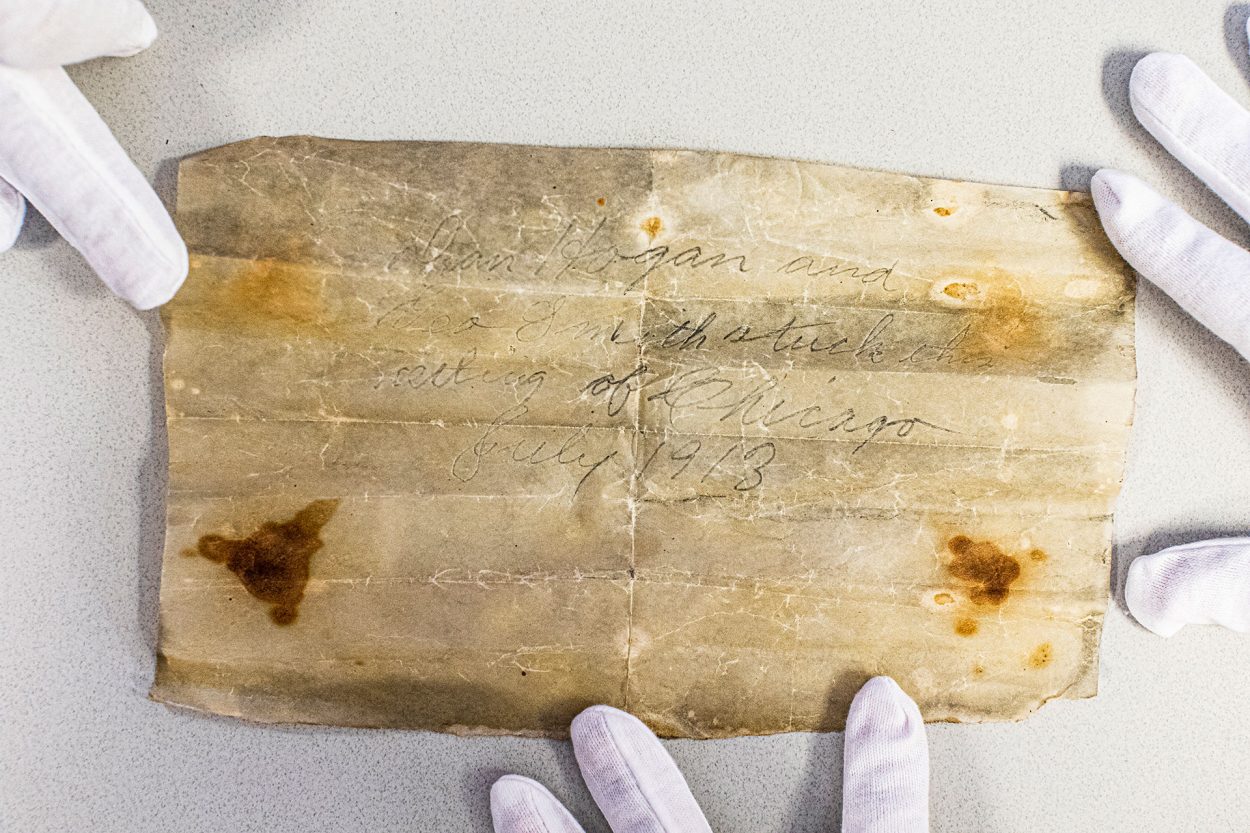
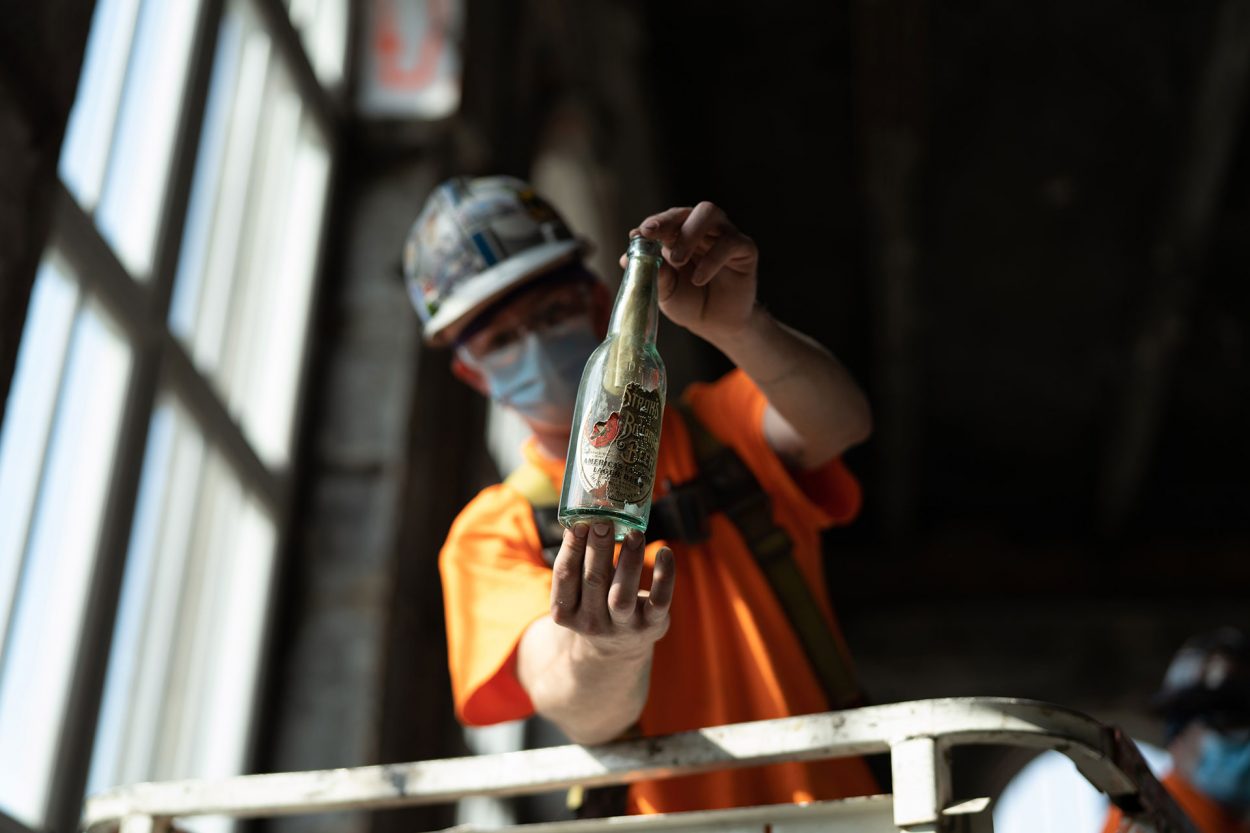
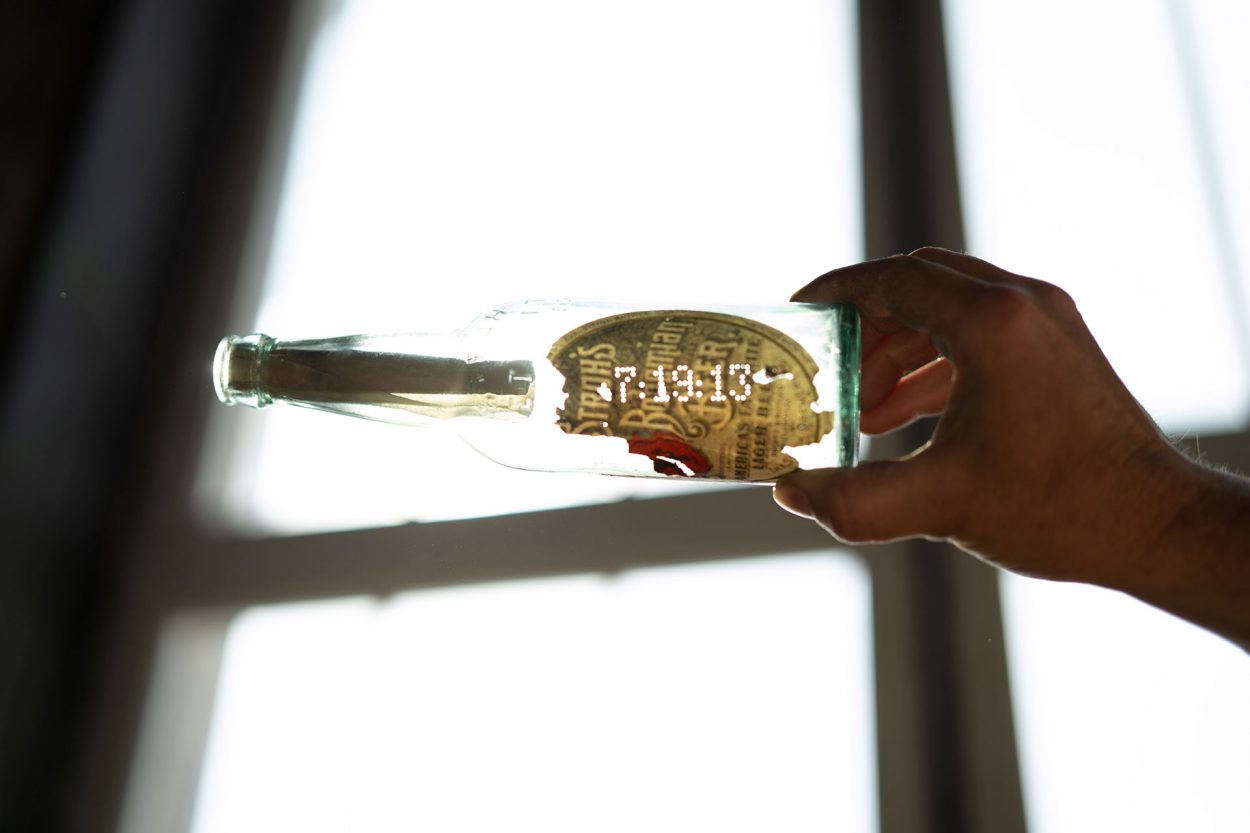
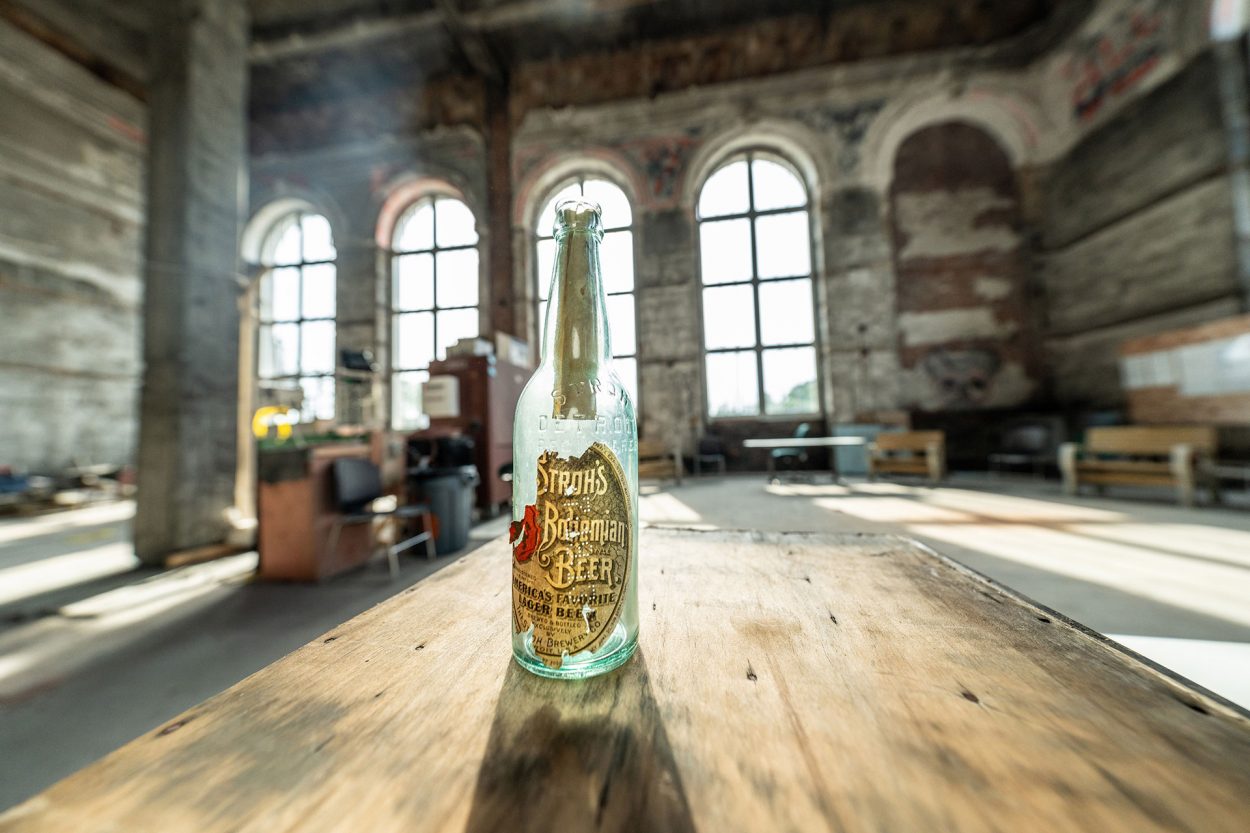
Days after unveiling the all-electric Ford F-150 Lightning, the next big reveal for Ford Motor Company is not a vehicle at all. Crews working at Michigan Central Station recently stumbled upon a pre-Prohibition-era Stroh’s beer bottle with a mysterious message neatly rolled and stuffed inside. Ford archivists removed the paper Thursday to reveal a message that is believed to have been written by two men who worked on the station’s original construction in 1913, though the entirety of the message is unclear.

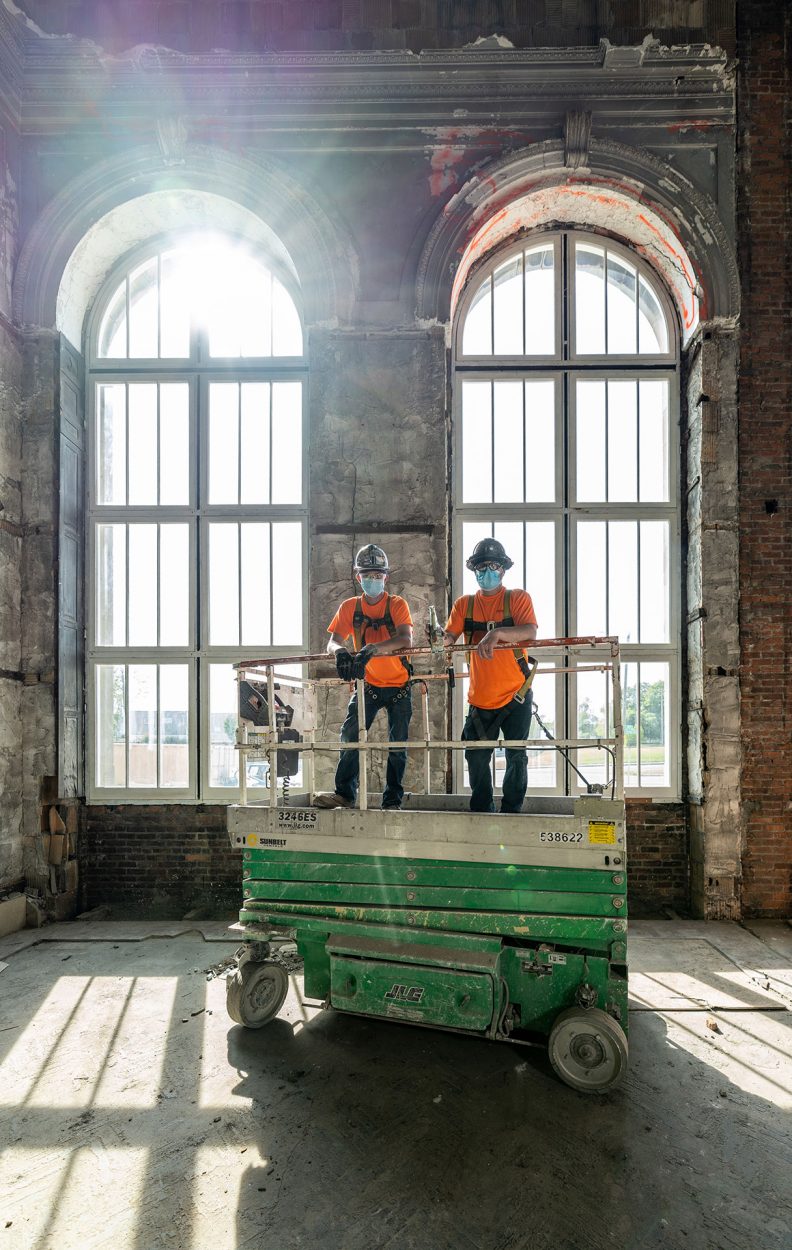
Construction crews working on the station’s transformation are in the process of restoring the most high-profile areas of the Beaux Arts-style building on the ground level, including the concourse, arcade, ticket lobby, restaurant and grand waiting room, which is filled with floor-to-ceiling scaffolding. This phase includes masonry repairs and plasterwork – including re-creating the ornate faux stone appearance that added to the original luster – and it is how a crew discovered the artifact.

The bottled, stamped with the date 7-19-13 – the station opened in 1913 – was discovered at around 6 p.m. on May 4 by Lukas Nielsen and Leo Kimble, laborer and foreman, respectively, for Homrich, a plaster restoration contractor working in the station’s tea room. The men were praised for resisting the urge to open the bottle themselves.

“It was extremely tempting, it really was,” said Nielsen. “If we did anything to remove it, we would have destroyed it.”

Nielsen and Kimble were on a scissor lift to reach a high section of plaster cornice that would be removed from the wall when Nielsen noticed something behind the cornice – a glass bottle stuffed upside-down and situated behind the wall’s crown molding. Kimble was about to strike the wall when Nielsen stopped him. They stopped working and removed the bottle instead.

The men were filled with excitement as they returned to the floor at 6:45 p.m., taking the bottle straight to David Kampo, project superintendent for Christman-Brinker, the construction team leading the restoration project. Later that night, they also found a Finck’s overalls button believed to have fallen off a worker during the original construction. It too was found inside the wall. In the early 1900s, when the station was built, Finck’s “Detroit Special” overalls were synonymous with quality denim garments for laborers.

“I think the bottle was left there with the hope that someone finds it in the future,” said Kampo.

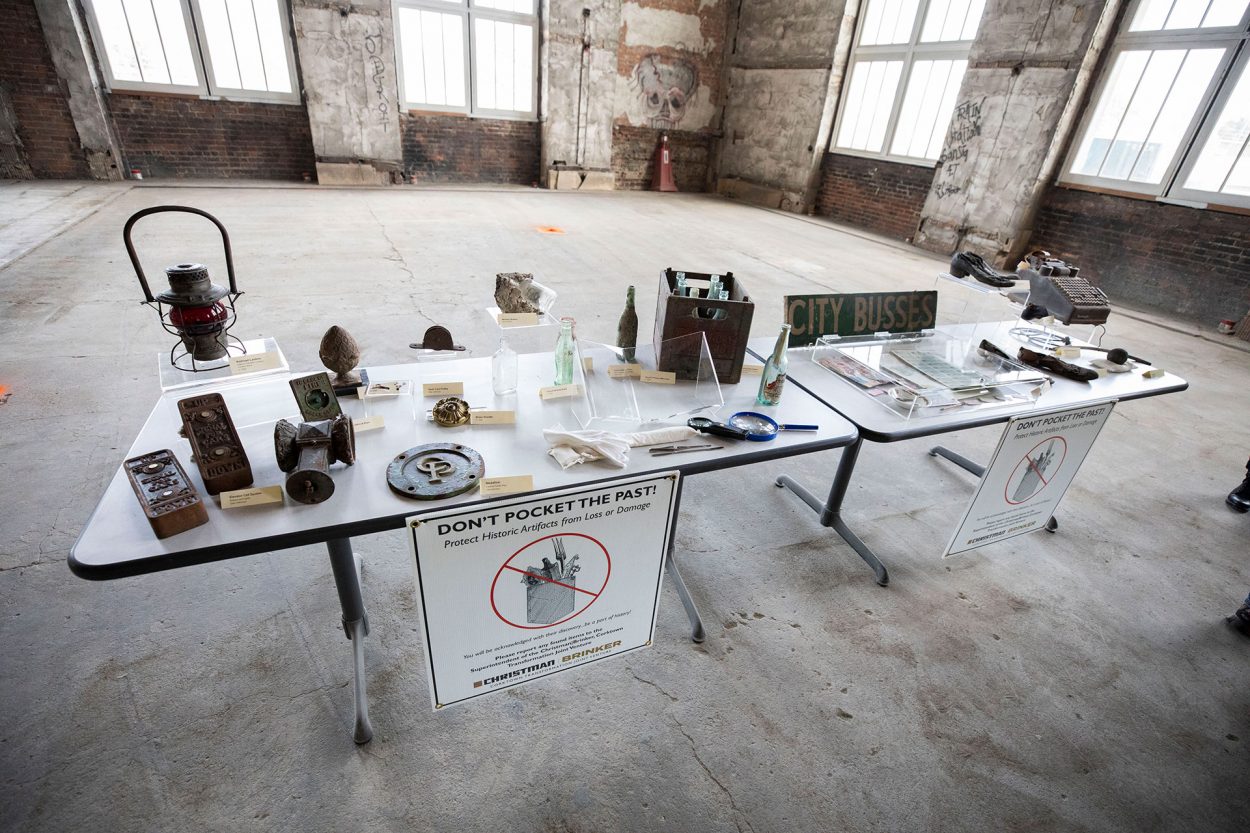
Nielsen and Kimble, who have found other vintage bottles inside the station, though without mysterious notes inside, said it’s rare to find any artifacts at construction sites because items get destroyed very easily. More than 200 items, including nearly 100 that have been used to replicate new pieces of the building, have been found over the course of Ford’s multi-year renovation.

“The items that have been found show the care that each of the individual construction workers are taking when they’re doing their work,” said Rich Bardelli, Ford construction manager for the Michigan Central development project. “They saw it and they knew it was important, so they brought it to us. My reaction was to wait to open it and make sure we do it right.”

Other recent finds include a saucer from a china set, which was recovered in the basement. During the removal of an elevator shaft, a room was discovered on an intermediate level that contained an adding machine, baby shoes, women’s shoes and other items. Old tickets and payment ledgers for bills and invoices have also been discovered. An old Shinola shoeshine bottle was found nearby, at the former brass factory next to The Factory.

The items will be relocated to Ford’s purpose-built archives space in Dearborn, to be integrated into the company’s larger collection. The paper containing the message will be delicately cared for by Ford archivists in their temperature-controlled space, including being rehumidified and placed into a storage box to cradle it.

“The main thing you have to do is slow down the deterioration of the paper,” said Heritage and Brand Manager Ted Ryan. “With the bottle, that’s easy because it’s glass, but we’ll also have to make sure the rest of the label doesn’t deteriorate. It’s just like the pieces of a classic car.”

Nielsen, a Garden City resident who has lived in the Detroit area since birth, started working at Michigan Central in February. He said he hopes the message in the bottle is something important that relates to the building. “I would drive past it and wonder what’s going to happen to the train station,” he said. “Now, we are going to be part of the history of the building. It’s good to see it being revitalized after sitting derelict for so long.”

Ford purchased the long-vacant train station in 2018 and the preservation project began shortly thereafter. It will become the centerpiece of Michigan Central, a 30-acre mobility innovation district in Corktown featuring a mix of public-facing shops, restaurants and community amenities, as well as dynamic spaces for Ford employees and the company’s innovation partners to develop, test and launch new solutions to solve urban transportation challenges.

More than 400 workers are currently on site each day, doing masonry repairs and installing roofing, flooring, windows, plumbing and electrical systems. Crews are also busy restoring the magnificent Guastavino vaulted ceiling in the old waiting room that features three self-supported arches, and fixing terracotta cornices and limestone capitals on the exterior of the building.

Construction on Michigan Central Station will be complete by the end of 2022.

A clean-up worker discovers a bottle of history. Time stamped for posterity. Time in a bottle. Table full of found items from the past. Message Mystery at Michigan Central Station Crews working at Michigan Central Station recently stumbled upon a pre-Prohibition-era Stroh’s beer bottle with a mysterious message neatly rolled and stuffed inside. Ford archivists removed the paper Thursday to reveal a message that is believed to have been written by two men who worked on the station’s original construction in 1913, though the entirety of the message is unclear.

The post Message Mystery at Michigan Central Station appeared first on Michigan Central.

]]>
A Century Later, Same Indiana Quarry Again Provides Limestone For Michigan Central Station https://michigancentral.com/a-century-later-same-indiana-quarry-again-provides-limestone-for-michigan-central-station/ Wed, 13 Nov 2019 20:23:37 +0000 https://michigancentral.com/?p=982 As the second phase of the Michigan Central Station restoration continues, work is focusing on cleaning, repairing and replacing eight acres of masonry on the exterior of the building. To support this work, scaffolding now wraps around the west half of the 15-story tower. Soon, cranes and workers will begin disassembling stone from around the […]

The post A Century Later, Same Indiana Quarry Again Provides Limestone For Michigan Central Station appeared first on Michigan Central.

]]>
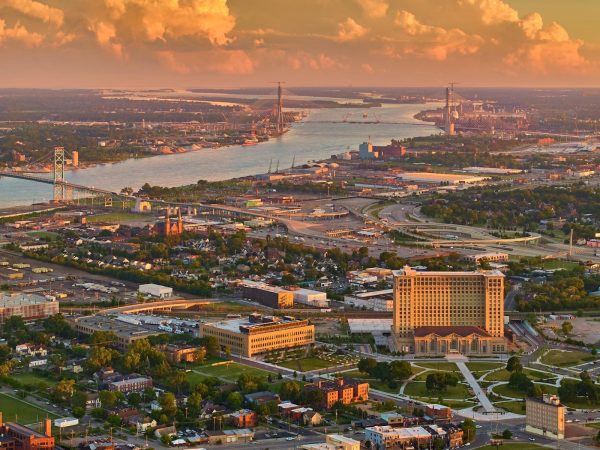
As the second phase of the Michigan Central Station restoration continues, work is focusing on cleaning, repairing and replacing eight acres of masonry on the exterior of the building. To support this work, scaffolding now wraps around the west half of the 15-story tower.

Soon, cranes and workers will begin disassembling stone from around the Waiting Room entrance, which faces north toward Michigan Avenue, to allow craftsmen to fix the limestone façade and recreate missing and deteriorated ornate pieces – all part of Ford’s efforts to restore the Beaux-Arts building to its original grandeur.

To retain the historical integrity of the station, which first opened in 1913, the limestone blocks being used to replace the deteriorating stone on the façade will be sourced from the same Indiana quarry that provided the limestone during the original construction. Some of those early blocks of limestone still lie in a field a few feet from where they were first mined more than 100 years ago.

The Dark Hollow Quarry where the unique patterned limestone is found was officially closed in 1988. That grainy pattern fell out of favor with building projects in the 1920s. The remaining blocks of stone are now within a forest of 30-year-old trees. Local trades will construct a new haul road to access the stones and remove trees to get access to the historic material.

“It’s super exciting to use stone that was originally intended for the building,” said Richard Bardelli, Ford’s construction manager for the restoration project, who recently visited the Indiana quarry. “To come back to the same quarry where the first limestone was sourced from allows us not only an exact match in color and texture, but to maintain a strong connection to its storied past.”

In the early 1900s, the limestone was quarried by hand, with men using chisels and hammers; huge blocks of stone were transported by train to customers where it was carved on site. Today, the limestone is extracted and cut by machines, large blocks are moved by truck to regional fabricators and then shipped in its final shapes to the job site.

One Clear Creek Stone Company employee currently mining the limestone from the quarry is the third generation of his family to do so. Jim Hillenburg’s grandfather helped quarry the original Dark Hollow limestone used in the construction of Michigan Central Station. Hillenburg’s father also worked at the quarry.

“It means a whole lot that all three of us have been in the limestone business,” said Hillenburg, who earlier this year found the matching stone with the same grain formations as the original limestone used at the Detroit landmark. “I’m proud that my grandfather and I both played a role in building Michigan Central Station, I’m picking up where he left off.”

“I enjoy my job and I’ve made a real good living,” he said, adding that he tried to get his son to follow the same career path and become the fourth-generation of the family in the business. Instead, his son is a pipe layer.

Michigan Central Station is one of many famous structures that has used Indiana limestone in its construction. Others include the Empire State Building, the National Cathedral, the new Yankee Stadium, the Pentagon and many state capitol buildings across the country.

Ford began the three-phase restoration project last year and plans to make the station the centerpiece of a new innovation hub in Corktown that will bring together new startups, established companies, urbanists, investors, innovators and academic institutions to reimagine the future of transportation and make smarter, sustainable communities.

Before the stone is removed from Dark Hollow Quarry, workers will measure the blocks and look for other stone with the same pattern. Some might have to be extracted from the ground. The last time stone from the woods was used for another restoration project was eight years ago.

Beginning this winter, an estimated 8,000 cubic feet of the stone, approximately 300 blocks, will be shipped from the quarry in southern Indiana to Capital Stoneworks in Bridgeport, Michigan. The company will take the raw stone and fabricate the replacement pieces needed for the train station.

The new stone will arrive in Detroit for installation in the spring 2020.

The post A Century Later, Same Indiana Quarry Again Provides Limestone For Michigan Central Station appeared first on Michigan Central.

]]>
Bill Ford Makes Employee’s Marriage Proposal Wish A Reality https://michigancentral.com/bill-ford-makes-employees-marriage-proposal-wish-a-reality/ Tue, 22 Oct 2019 19:56:01 +0000 https://michigancentral.com/?p=953 In 2017, Wesley Burkman’s life took an unexpected – and tragic – turn. His wife, Aleea, passed away at age 29, within a few weeks of being diagnosed with stage IV breast cancer. In the time that followed, Burkman’s Ford colleagues gave him an outpouring of support to help him cope. People often asked him […]

The post Bill Ford Makes Employee’s Marriage Proposal Wish A Reality appeared first on Michigan Central.

]]>
In 2017, Wesley Burkman’s life took an unexpected – and tragic – turn.

His wife, Aleea, passed away at age 29, within a few weeks of being diagnosed with stage IV breast cancer.

In the time that followed, Burkman’s Ford colleagues gave him an outpouring of support to help him cope. People often asked him if his work was being flexible.

“In many of the thank you cards I wrote to people, I found myself saying that my work community had gone so much further than being just ‘flexible,” he said. “Not only were my boss and manager incredibly understanding, but when they heard about my wife needing a wig made with her own hair during chemotherapy, they got enough people together to cover the cost.”

While Aleea passed away before they had a chance to make it happen, Burkman was able to put the $990 raised for the wig towards a college fund for their 2-year-old son.

Endeared by this show of support from his colleagues – including fellow members of a Ford bible study group volunteering to walk his dog early in the morning so he could stay home with his son – Burkman decided to submit a Ford employee story about how his coworkers had helped him through his grief.

About a week later, when he was casually working from home, he received a phone call from Bill Ford. The Executive Chairman said someone had showed him the story and he thought it was awesome how much Ford colleagues were doing for each other and he wanted to call to express his condolences.

At the end of that call, Ford told Burkman to contact him if he ever needed anything.

In the two and a half years that followed, Burkman, a technical specialist at the Ford Engineering Laboratory, was able to reassemble his life and find a new love, Tiffany. When he decided it was time to propose, he wanted to make sure the venue was extra special.

“I’ve always believed that asking someone to marry you is too important to waste over dinner and a movie” he said.

That’s when he remembered Bill Ford’s offer for help. He was looking for a grandiose location to give the occasion a unique, gritty Detroit feel. He considered the Michigan Theater, but the iconic train station was his ultimate location.

So he sent Bill an email with a unique request, not counting on getting a reply. But Bill’s team reached out soon after and granted Burkman his wish, to plan an elaborate proposal inside the historic train depot.

With a grand piano-serenaded dinner and the station’s grand lobby as his backdrop, he proposed to his girlfriend on October 5. Every detail was meticulously planned by Burkman and seven of his friends, six of them coworkers at Ford.

“Bill gave me a call a few hours before I popped the question to wish me luck,” Burkman said. “I feel like I’ve been the beneficiary of so much of his care and support.”

By the way, she said ‘yes.’

Burkman now gets asked by many people to explain how he was able to secure Michigan Central Station as the venue for his proposal.

His answer: “Sometimes you have to imagine what hasn’t happened yet. I asked and it happened and it was awesome. I’ve had multiple experiences working within Ford where if you ask for something, big things can happen.”

The post Bill Ford Makes Employee’s Marriage Proposal Wish A Reality appeared first on Michigan Central.

]]>
Ford And Its Michigan Central Station Contractors Bring Trade Jobs Back To Detroit https://michigancentral.com/ford-and-its-michigan-central-station-contractors-bring-trade-jobs-back-to-detroit/ Thu, 26 Sep 2019 20:40:32 +0000 https://michigancentral.com/?p=985 Seven young men from Detroit’s Randolph Technical School are among the team of workers helping RAM Construction Services with masonry and brick repairs at Michigan Central Station, which Ford Motor Company purchased last summer. The students, seniors or recent graduates of the vocational skills school, received formal trade apprenticeships thanks to a new program launched […]

The post Ford And Its Michigan Central Station Contractors Bring Trade Jobs Back To Detroit appeared first on Michigan Central.

]]>
Seven young men from Detroit’s Randolph Technical School are among the team of workers helping RAM Construction Services with masonry and brick repairs at Michigan Central Station, which Ford Motor Company purchased last summer.

The students, seniors or recent graduates of the vocational skills school, received formal trade apprenticeships thanks to a new program launched this summer by Ford, its lead contractors RAM and Christman-Brinker, the city of Detroit, and local trade unions.

Launched in June, the goal of the program is to help fill a void in the availability of skilled trades people in Detroit and create opportunities for paying careers for local residents. Among the issues developers and contractors in the city face is the lack of specialized trade workers such as masons, brick layers, plumbers and electricians.

This year 12 high school students at Randolph were given the opportunity to work on masonry projects around the city during the summer, including Michigan Central Station and parking decks at Wayne State University.

The apprentices are paid an hourly wage and are mentored by other construction employees, receiving one-on-one guidance on work and life skills. The program could grow to as many as 40 students in the coming years and be expanded to other trades.

“A big part of our project is masonry work and we’ve worked with our partners to design a unique program that starts in the high schools and gets kids exposed to the trades,” says Richard Bardelli, Ford’s construction manager at Michigan Central Station. “From there they get a pathway to an apprenticeship with a first rate contractor like RAM that will really grow their skills.”

Ford selected RAM as the masonry contractor to help restore the train station’s 15-story tower and ground floor to how it looked in 1913.

The apprentices, including 18-year-old former Randolph student Maguel Ligon, will spend the next two years cleaning, repointing and replacing the damaged terracotta, limestone and brick that make up the station’s exterior.

“I always wanted to work on construction but I didn’t know how to do it.” says Ligon, who joined the summer program and lives about 10 minutes away from the station on Detroit’s east side. “Everybody thinks you have to go to college after school but there are so many other things you can do. I’m ready to learn.”

Robert Mazur, president of RAM, says the apprentice program is an investment in Detroit’s youth, developed from a “dream” to bring more 11th and 12th grade students into the skilled trades and help with the plethora of projects under construction across the city.

“Currently there are not enough people who live in Detroit with the skills we need for projects like the train station,” says Mazur, whose company has also done restoration work at the Book Tower in downtown Detroit and Wayne State University. “We’re happy to give long term career opportunities to these students and give them the tools to succeed.”

Ford began the three-phase restoration project nearly a year ago as part of its plan to make Michigan Central Station the centerpiece of a new innovation hub in Corktown that will bring together employees and other partners, entrepreneurs and businesses to create future mobility solutions.

Bardelli points out that highly visible projects like the restoration of the long-abandoned train station can be a magnet to draw young people into the apprentice program.

“Kids don’t really understand what trade skills like masonry work is but they’ve heard about the train station,” he says. “We can use it as a platform to bring students in, and then they find out that these are really great paying jobs, highly skilled jobs and important jobs.”

For apprentices like Maguel Ligon, helping restore Michigan Central Station is a big deal and creates a sense of hometown pride.

“I’m really excited to start working at the station,” he says. “We’re cleaning things up and helping change people’s perceptions of the city. We’re helping bring the city back.”

The post Ford And Its Michigan Central Station Contractors Bring Trade Jobs Back To Detroit appeared first on Michigan Central.

]]>
Plumb Gig: Ford Hires History-Making Detroit Plumber To Preserve Station https://michigancentral.com/plumb-gig-ford-hires-history-making-detroit-plumber-to-preserve-station/ Fri, 08 Mar 2019 20:45:12 +0000 https://michigancentral.com/?p=988 As Ford works to rebuild the historic Michigan Central Station, it is only fitting that one of its contractors has herself made history. Four decades ago, when Adrienne Bennett earned her plumber’s license, she became the first woman in Michigan to successfully complete a plumbing apprenticeship program in the state. A few years later, when […]

The post Plumb Gig: Ford Hires History-Making Detroit Plumber To Preserve Station appeared first on Michigan Central.

]]>
As Ford works to rebuild the historic Michigan Central Station, it is only fitting that one of its contractors has herself made history.

Four decades ago, when Adrienne Bennett earned her plumber’s license, she became the first woman in Michigan to successfully complete a plumbing apprenticeship program in the state. A few years later, when she became a licensed master plumber and plumbing contractor, she was the first female in North America to do so.

Bennett has since turned her expertise with copper pipes and HVAC systems into a growing construction and maintenance business, Benkari LLC. Along with around a dozen workers, the firm has worked on some of the biggest projects in the city. Now it can add Michigan Central Station to the list.

In the fall, Ford Land hired Benkari as a plumbing contractor to help winterize and dry out the iconic station, which has sat empty for more than 30 years. Benkari has installed a temporary system to get water out of the building and protect it from any further deterioration.

“I’ve always been awestruck by the train station,” Bennett said. “It’s an honor to be involved in its restoration and play a part in bringing it back to life.”

https://www.youtube.com/watch?v=xh_c-T4Xt5Y

Bennett is one of the first of many Detroit-headquartered contractors Ford has committed to hiring on the site — part of a goal, set out in the Community Benefits Agreement, to make half the workforce at the station be Detroit residents. Ford has also earmarked $5 million for workforce training and development to build a pipeline of talent to meet the different needs on site, including stone masonry, mechanical and electrical work.

It was just such a program that brought Bennett into the industry. At a 1976 rally for Jimmy Carter’s presidential campaign, Bennett was approached by a recruiter looking to promote minority women in the construction trades.

Other female recruits dropped out, but Bennett persevered, overcoming many challenges: working in extreme weather, being a young woman in a male-dominated industry and even traveling two hours each way for her first job. Her determination helped Bennett not only earn her historic licenses, but also become a plumbing inspector and a code enforcement officer for the city, all before founding Benkari with her son a decade ago.

Along the way, Bennett has had a front seat to Detroit’s rebirth, helping build the Millender Center apartments downtown, a major expansion at Henry Ford Hospital and the current restoration of the Theodore Levin Federal Courthouse. She was plumbing inspector for the restoration of the Fox Theatre in the 1980s. And not long after founding Benkari, the Bennetts landed a job on Little Caesars Arena.

Now, the renovation of Michigan Central has brought Bennett, and Detroit, full circle.

When she was a child, her family moved here from Chicago. Like so many, her first experience of Detroit was through the marble grandeur of the station.

“It used to serve millions of people and was then thrown away,” she said. “And now it’s being restored. It’s a blessing for the city.”

The post Plumb Gig: Ford Hires History-Making Detroit Plumber To Preserve Station appeared first on Michigan Central.

]]>